
At KwaShandu Civil Engineers, we’ve seen a growing shift in the way people view energy, sustainability, and independence. One question we’re being asked more frequently is: Is off-grid living the future of construction? Based on our experience across residential and remote development projects, the answer is becoming clearer—off-grid living is no longer a niche trend; it’s rapidly becoming a mainstream consideration in construction planning.
As builders, planners, and civil engineers, we must adapt to new challenges and offer solutions that meet tomorrow’s needs today. In this blog, we explore what off-grid living entails, its benefits and drawbacks, and how we’re preparing for its rise.
Understanding Off-Grid Living
What Does It Really Mean?
Off-grid living refers to a lifestyle that is self-sufficient and independent from public utility services. This includes:
- Generating electricity via solar, wind, or hydro systems
- Harvesting and storing rainwater
- Managing waste through composting or biogas systems
- Growing food locally and sustainably
In construction, it means designing buildings that support this autonomy—whether through eco-conscious materials, renewable energy integration, or passive heating and cooling designs.

1. Why Off-Grid Living is Gaining Popularity
Rising Costs and Load Shedding
In South Africa, the combination of frequent load shedding and rising utility bills is pushing many people to consider off-grid living. For homeowners and businesses alike, the idea of reducing reliance on Eskom or municipal services is incredibly appealing.
We’ve worked with several clients recently who chose solar energy systems and rainwater harvesting over connecting to inconsistent public supply lines.

2. Environmental Considerations
Sustainable by Nature
One of the most compelling arguments for off-grid living is its environmental benefit. Off-grid homes typically:
- Produce fewer carbon emissions
- Reduce water waste
- Encourage biodiversity through sustainable landscaping
For developers and architects, this aligns with global green building standards and targets such as EDGE and LEED certifications.
EDGE Certification – Green Building Council SA

3. Technological Advancements Supporting Off-Grid Construction
Making the Impossible Possible
Technologies that were once expensive and inaccessible are now more affordable and efficient:
- Lithium-ion battery storage: stores excess solar power for night use
- Smart energy management systems: monitor consumption
- Water purification systems: make rainwater potable
- Modular construction: streamlines building in remote areas
We integrate these technologies in our builds, particularly in game lodges, eco-tourism sites, and rural community housing.
4. Designing for Energy Independence
Architecture That Works With Nature
In off-grid projects, we take a passive design approach. This includes:
- North-facing orientation for sunlight
- Thermal insulation for temperature control
- Strategic window placement for airflow
This design philosophy ensures lower energy needs from the outset, reducing dependency on high-tech solutions.
5. Water Independence Strategies
Off the Grid, Not Out of Water
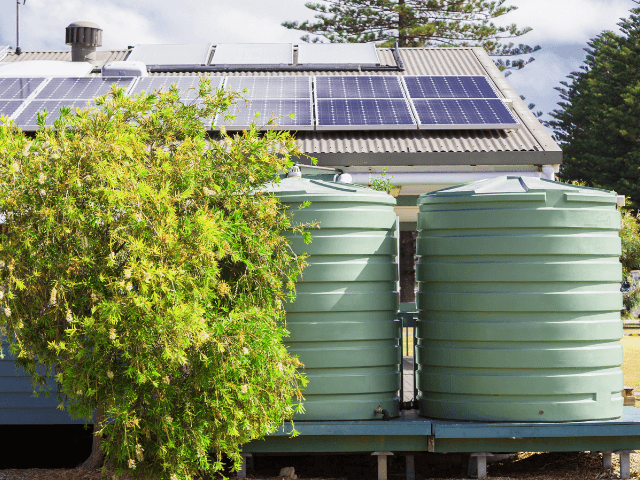
Water is critical. In our off-grid builds, we use a combination of:
- Roof catchment systems
- Underground storage tanks
- Greywater recycling for irrigation
In some remote sites, boreholes or natural springs also supplement supply. Proper filtration ensures water is safe for consumption.

6. Waste Management in Off-Grid Homes
Out of Sight, Out of Problem
Managing waste off-grid requires innovative thinking. We implement:
- Composting toilets that save water
- Septic tanks for blackwater treatment
- Biogas digesters that turn organic waste into cooking fuel
These systems reduce environmental impact while offering practical, cost-saving solutions.
7. Challenges of Off-Grid Living
It’s Not All Sunshine
While appealing, off-grid living has its challenges:
- Higher upfront costs for solar, batteries, and systems
- Maintenance and technical know-how
- Limited scalability in high-density areas
However, many of these are becoming less significant with technology improvements and rising energy prices.
8. Urban Off-Grid Construction: Is It Possible?
A Balancing Act
Off-grid principles are typically associated with rural or remote living. However, in cities, hybrid solutions are gaining traction. These include:
- Partial solar power systems
- Greywater reuse systems
- Rooftop gardens for food production
We see future urban developments incorporating more of these elements as city infrastructure becomes strained.
9. How KwaShandu is Preparing for Off-Grid Construction
Building the Future Today
We’ve invested in upskilling our teams in:
- Renewable energy installation
- Water conservation design
- Off-grid project management
We’re currently developing several off-grid and hybrid model homes to test designs, with a long-term vision of offering turnkey off-grid property solutions across South Africa.
10. Should You Consider Off-Grid Living?
The Right Fit for the Right People
If you’re building in a remote location, or want to reduce your dependency on municipal services, off-grid living is a fantastic option. It’s not for everyone, but it’s certainly the future for many.
Ask yourself:
- Are you comfortable with some level of self-maintenance?
- Do you value environmental sustainability?
- Would you like more independence from public utilities?
If yes, our team can help design a practical, cost-effective off-grid home that fits your lifestyle.
Final Thoughts: Is Off-Grid Living the Future of Construction?
In our opinion at KwaShandu, the answer is yes—off-grid living represents a growing and necessary evolution in how we build. It’s about resilience, sustainability, and self-reliance. Whether fully off-grid or part of a hybrid system, we believe these principles will define construction for decades to come.
If you’re curious about how to start your off-grid journey, we’d be happy to help. Our expert team is ready to walk you through the design, implementation, and maintenance phases of a successful off-grid construction project.
📞 Contact us today to explore your options.


Thought-provoking
Interesting read! Seeing a lot of focus on localized gaming experiences now, which is smart. Platforms like jili 56 com are leading the way with that, offering tailored options for Filipino players. Hoping for responsible gaming to stay a priority!
JL78 offers a mindful gaming space for PH players via jl78 download. Their psychological framework helps maintain balance, making it a responsible choice over typical casino apps today.